
MichBio on Capitol Hill: Advancing Michigan's Voice in the National Biotech Policy Debate
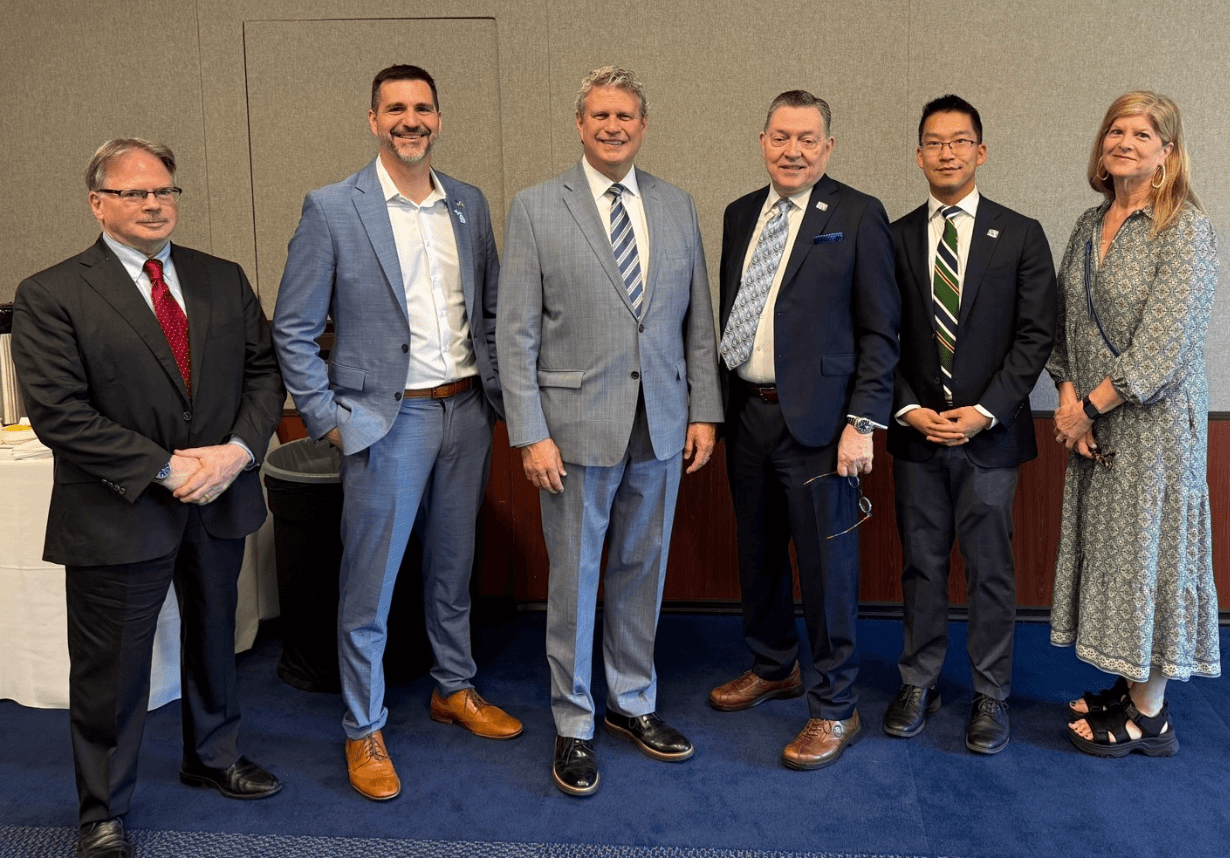
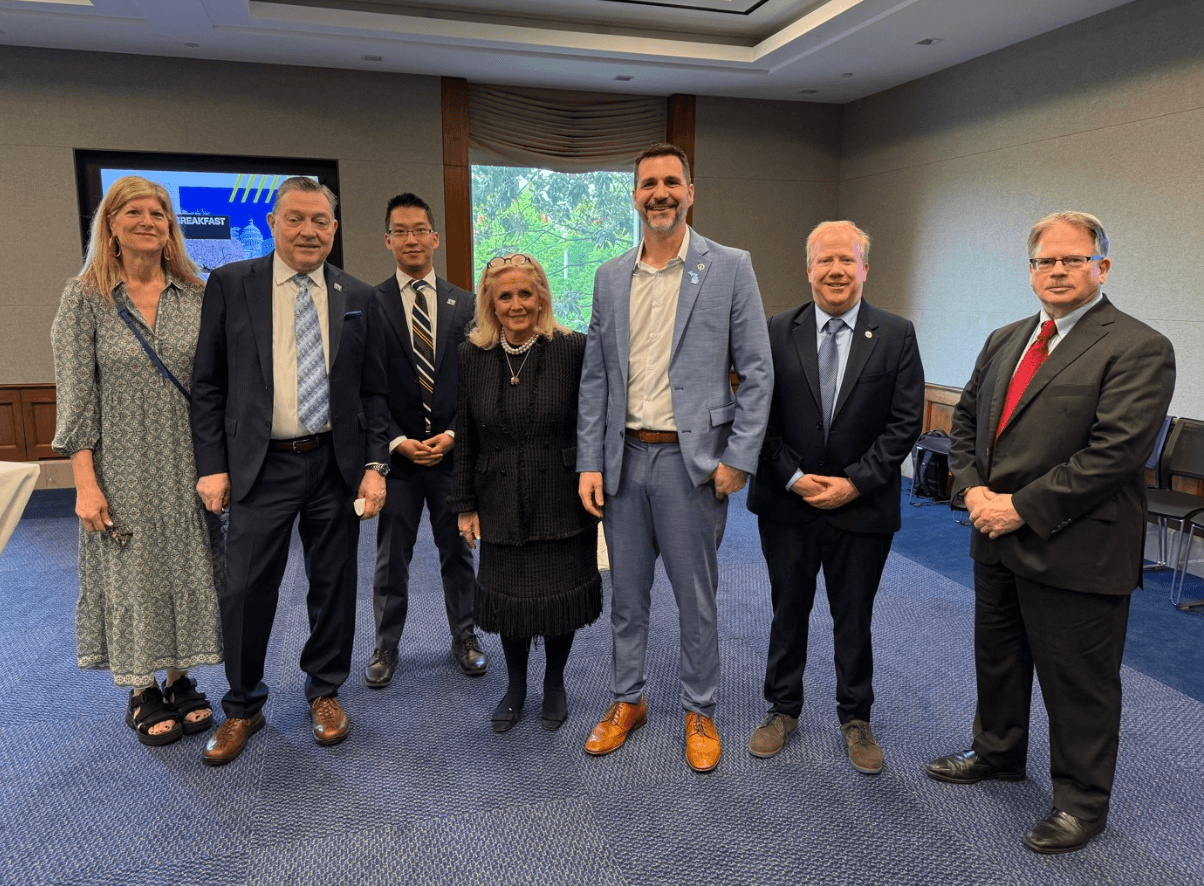
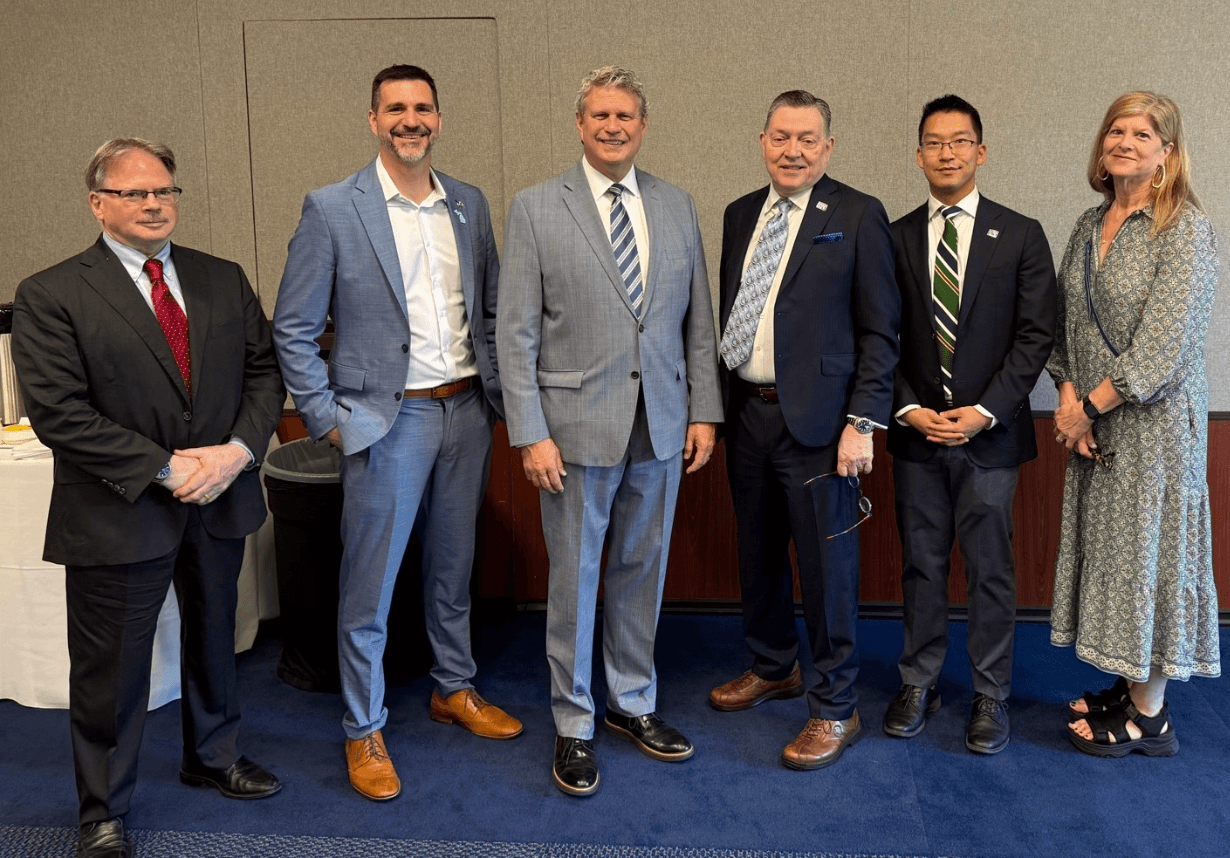
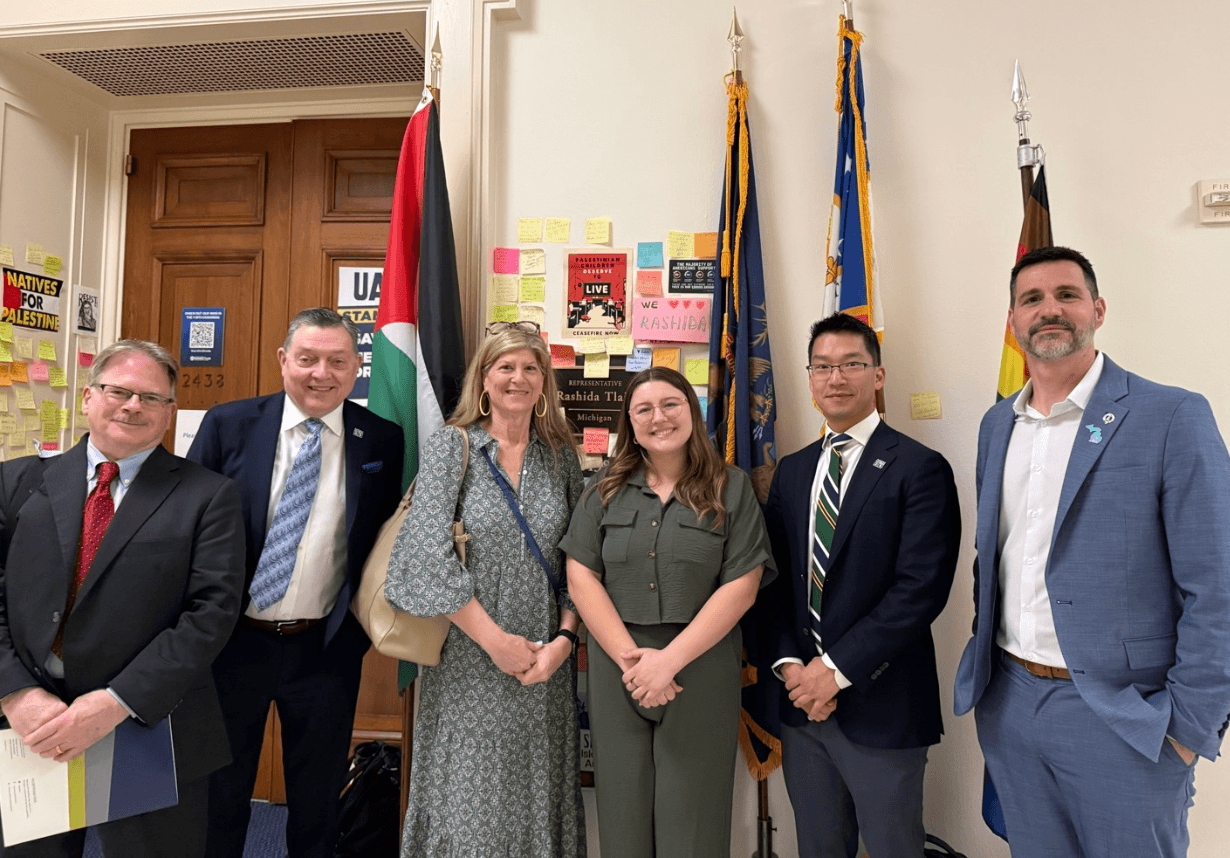
MichBio joined leaders from across the country in Washington, D.C. for the 2026 Council of StateBioscience Associations (CSBA) Fly-In, bringing Michigan’s voice directly to federal policymakers at a critical moment for the U.S. life sciences sector. The Fly-In, held April 14–15 convened state association leaders and industry executives for policy briefings, strategy sessions, and two days of Congressional meetings, and a MichBio Capitol Hill Breakfast Reception for Michigan’s Members of Congress (MoC) and staff.
Representing MichBio and Michigan were:
-
Laura Bonnell, The Bonnell Foundation - patient advocate
-
Harold Chase, NSF International - food and water standards/certification organization
-
Andrew Kocab, PhD, CEO, Dvant Pharma - early-stage startup
-
Brandon McNaughton, PhD, CEO, Akadeum Biosciences - early-stage startup
-
Tom Moga, Dykema - IP protection counsel
-
Stephen Rapundalo, PhD, CEO, MichBio
Together, the MichBio delegation shared real-world perspectives on how federal policy decisions are shaping innovation, investment, manufacturing, and patient access within Michigan's biosciences ecosystem and nationally.
The Breakfast Reception and Capitol Hill meetings provided a valuable platform to connect directly with lawmakers and their staff, reinforce the importance of the biosciences economy, and advocate for policies that sustain U.S. leadership in biotechnology. With the sector supporting millions of jobs and driving medical breakthroughs, participants emphasized that predictable, sustained, innovation-friendly policy is essential to maintaining momentum.
Key Policy Priorities Discussed
-
NIH Funding Cuts and Delays
Participants raised serious concerns about instability in federal research funding, noting that NIH-supported science underpins nearly all new drug development. Delays in grantmaking and proposed funding cuts threaten to slow the innovation pipeline, disrupt long-term research, and weaken the foundation for future medical breakthroughs. Stable and timely NIH funding is essential to sustaining discovery, particularly for early-stage and academic research that feeds the biotech ecosystem.
-
FDA Reform and Regulatory Certainty
Delegates highlighted growing uncertainty at the FDA, including leadership turnover and inconsistent regulatory guidance, which are deterring investment and slowing development timelines. They urged Congress to support adequate staffing and structural reforms that enhance transparency, improve efficiency, and modernize review processes to ensure the U.S. remains globally competitive while accelerating safe patient access to new therapies.
-
Most Favored Nation (MFN) Pricing and Tariffs
The delegation emphasized that MFN-style drug pricing proposals and potential tariffs on medicines could significantly harm innovation and patient access. Importing foreign price controls risks undermining the economic incentives that drive R&D, while tariffs would increase manufacturing costs and disrupt supply chains. These policies would disproportionately impact small and mid-sized biotech companies - the core drivers of innovation - while potentially delaying or limiting access to new treatments for patients.
-
Invitation to Join the Congressional BIOTech Caucus I
MichBio participants encouraged specific MoCs in Michigan’s delegation to join the bipartisan Congressional BIOTech Caucus, which is focused on advancing policies that strengthen U.S. biotechnology leadership, improve bioliteracy, and address national security challenges tied to the bioeconomy. With more than 50 bipartisan members, the Caucus provides a critical forum for collaboration and education at a time when global competition - particularly from China - is intensifying. The Caucus doesn’t have any representation from Michigan’s delegation currently.
-
Proposed 50% Tax on Technology Transfer Licensing (Bayh-Dole Threat)
Participants also raised strong concerns about a proposed 50% tax on university technology transfer licensing royalties, warning that it would fundamentally undermine the Bayh-Dole framework that has powered U.S. innovation for decades. The Bayh-Dole system enables universities, small businesses, and federal labs to license federally funded discoveries to private-sector partners - fueling startup creation, job growth, and commercialization of breakthrough technologies. A tax of this magnitude would strip critical revenue from tech transfer offices - many of which already operate at a loss - forcing reductions in licensing activity and weakening public-private partnerships. Since 1996, this model has supported more than 19,000 startups and 6.5 million jobs, while generating significant downstream tax revenue and economic growth. Delegates emphasized that imposing such a tax would discourage commercialization, stall promising discoveries, and ultimately erode America’s global leadership in innovation
MichBio extends its sincere appreciation to the Michigan Congressional delegation for their engagement and partnership during the Fly-In. Our delegation met with staff from the offices of Senators Slotkin and Peters, and Representatives Bergman, Barrett, Huizenga, James, McDonald Rivet, Moolenaar, Scholten, Stevens, Thanedar, Tlaib, and Walberg. We were also pleased to have direct exchanges with Senators Slotkin and Peters during their Coffee Hours, as well as with Representatives Debbie Dingell and Bill Huizenga, who joined us at the MichBio Breakfast Reception. We also thank our member company, Emergent BioSolutions, for their generous sponsorship of the Breakfast Reception, which helped foster meaningful dialogue between industry leaders and elected officials.
As policymakers weigh decisions that will shape the future of innovation, Michigan’s life sciences leaders made clear that sustained investment, regulatory clarity, and pro-innovation policies are essential - not only for economic growth, but for advancing patient care and national security.
These conversations are invaluable in ensuring Michigan’s biosciences community remains a strong voice in federal policy discussions.
