
Workforce Report: Michigan's Bioindustry Workforce is Growing but Sustainability is a Challenge
Michigan Life Sciences Workforce Report
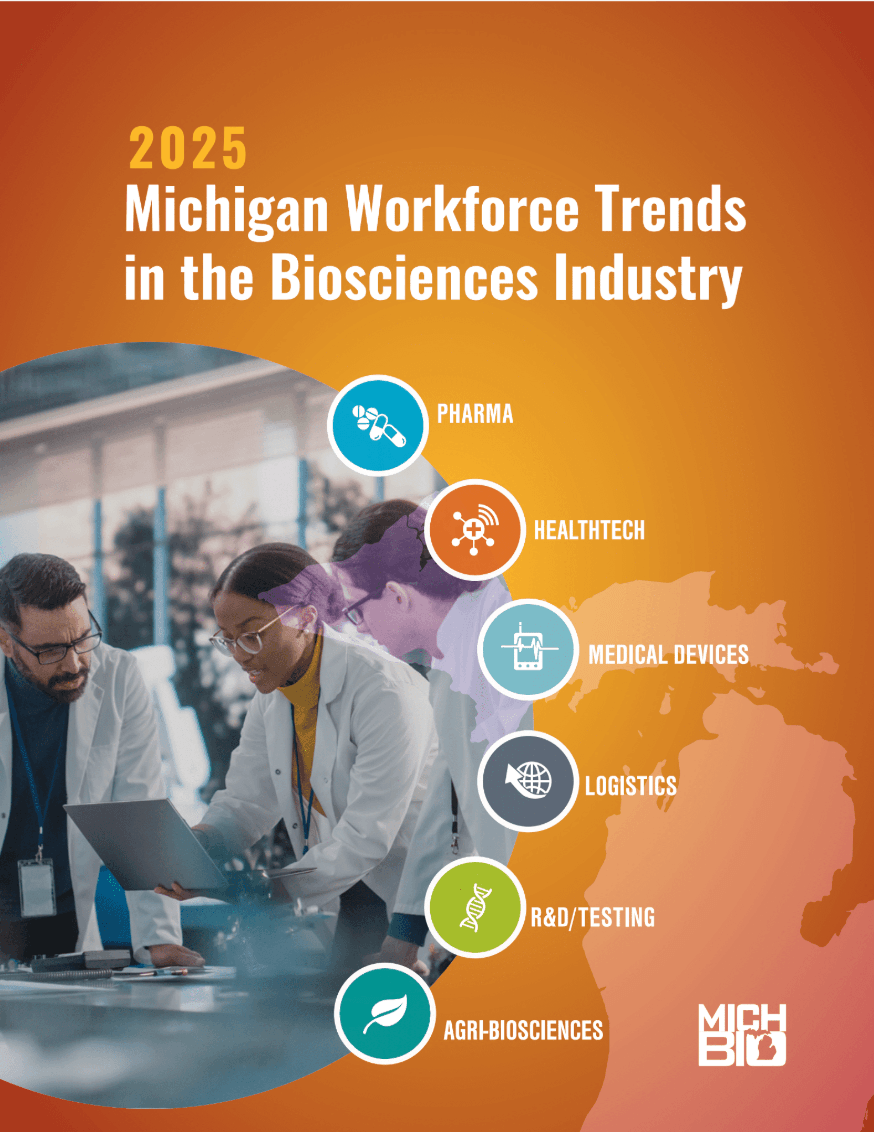 Explore the latest data shaping Michigan’s life sciences workforce—this new report highlights continued industry growth alongside shifting hiring strategies and emerging talent challenges critical to sustaining long-term innovation. Drawing on statewide insights, it offers a clear look at where the bioindustry is headed and what’s needed to stay competitive.
Employment in Michigan’s bioindustry has reached a record 47,815 jobs in 2024 - up 42% since 2006 - reinforcing its role as a cornerstone of the state’s innovation economy. At the same time, hiring activity has moderated following a peak in 2022, reflecting not contraction, but a transition toward more selective, efficiency-driven workforce strategies.
Michigan’s ecosystem remains structurally strong and diverse, spanning pharmaceuticals, medical devices, research, and logistics - with supply chain and distribution roles playing an increasingly prominent role in supporting global life sciences operations.
Key Workforce Trends
From Growth to Precision Hiring
Employers are moving away from broad hiring toward targeted recruitment for mission-critical roles, particularly in regulatory affairs, quality systems, advanced manufacturing, and data analytics.
Is Reshaping Roles
AI, automation, and digital systems are increasingly embedded across R&D, manufacturing, and logistics - changing how work is done rather than replacing jobs.
Demand for Skilled Technical Talent
In-demand roles - such as medical technicians, QA/QC professionals, data scientists, and production technicians - highlight the industry’s focus on applied science, compliance, and operational excellence.
Multiple Entry Points, Rising Expectations
While accessible to entry-level talent, employers increasingly prioritize mid-career experience and specialized skill sets, especially in regulated environments.
Upskilling Is Now Essential
Companies are investing more heavily in reskilling and upskilling incumbent workers, recognizing that developing internal talent is often more effective than hiring externally.
The Core Challenge: Building a Future-Ready Talent Pipeline
The report makes clear that Michigan’s workforce challenge is no longer simply about filling jobs - it is about building a resilient, adaptable, and future-ready talent pipeline.
Employers consistently point to the need for:
-
Stronger alignment between education and industry needs
-
Expanded work-based learning opportunities (internships, apprenticeships)
-
Earlier exposure to life sciences careers
-
Greater investment in digital, regulatory, and cross-functional skills
-
Retention of mid-career technical talent
Sustaining long-term growth will depend on talent quality, adaptability, and coordinated workforce strategy - not just job creation.
At the same time, there is growing urgency for the State of Michigan to deploy dedicated bioindustry training and workforce programs. Compared to peer states, Michigan lacks coordinated, industry-specific training infrastructure - creating a competitive disadvantage in attracting and retaining high-paying bioscience jobs.
Join the Conversation: BioTalent Summit – June 8, Lansing
Addressing these challenges will require coordinated action across industry, academia, and government. The BioTalent Summit later this year in Lansing will bring these stakeholders together, using the 2025 Workforce Trends Report as a foundation for advancing talent pipeline strategies and workforce development initiatives.
